Rooftop Package


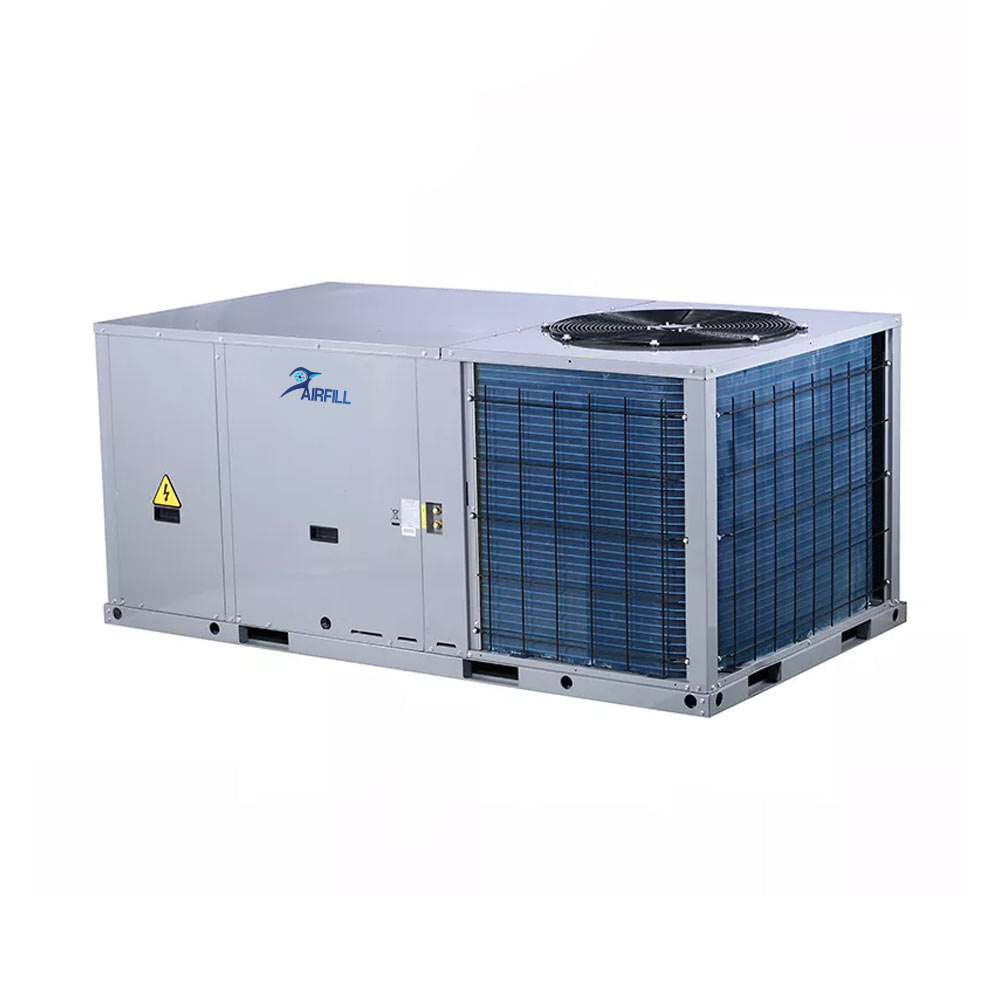
Rooftop Package
Rooftop Package under Midea License
Cooling capacity 5 to 30 tons of refrigeration
Energy efficiency A+
High-quality copper piping in all components
Highly efficient and reliable scroll compressors manufactured by Copeland, Hitachi, and Danfoss are used
Internal control panel with control functions, self-diagnosis, protection, temperature control
External port for refrigerant pressure check (for connecting pressure gauges)
High corrosion resistance of casing panels (industrial steel with G-90 galvanization)
Washable filter
Two-year warranty on Airfile electric systems
15 years of service and support
- What is a rooftop package or cooling package? A rooftop package is essentially an air conditioning device that is simply a combination of a chiller and an air handling unit, with some components of both removed. The rooftop package has an external unit that performs air ventilation; after the air is conditioned in the external unit, the ventilated air is sent into the environment through ducts. To save energy, rooftop package units have a return air duct to transfer the air from inside the environment back to the external unit for reconditioning before returning it to the environment. The critical importance of this device lies in its ability to supply fresh air. This means the device mixes the return air from the environment with fresh air and again conditions this new mixture before delivering it to our desired location. This device is suitable for public areas with high foot traffic and a need for fresh air, such as conference halls, offices, stores, banquet halls, etc., as well as warehouses that store food and goods, which require air filtration, dehumidification, and fresh air injection to prevent spoilage. What is the difference between a rooftop package and an air handling unit? Rooftop packages and air handling units have many similarities. Both devices are used for air conditioning and both can provide fresh air and air filtration. The main difference between the cooling package and the air handling unit lies in their ability to produce cooling. The air handling unit, also known as an air delivery unit, requires a connection to a separate chiller or condensing unit to perform the cooling function. In other words, the air handling unit alone is not capable of...